01
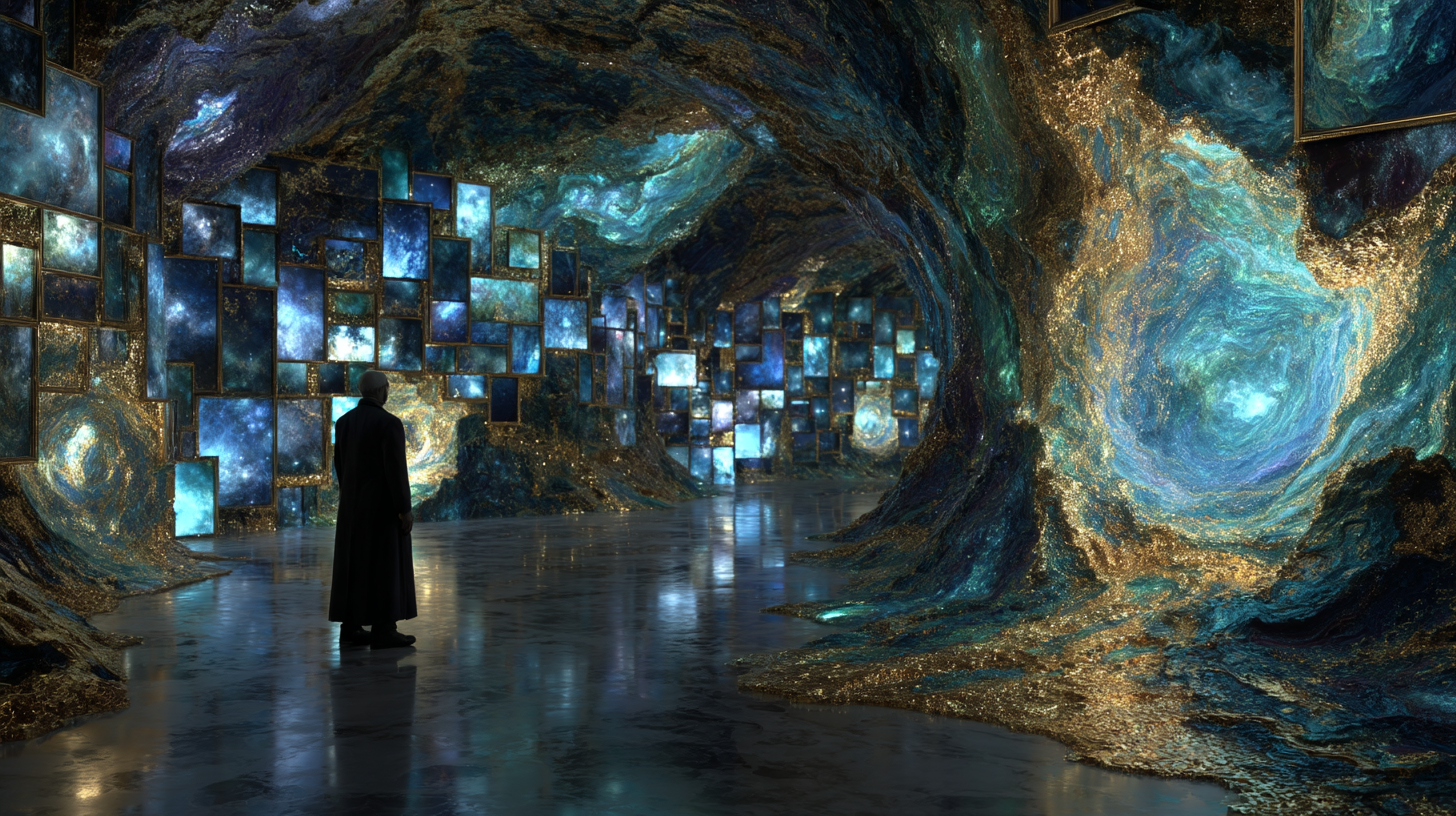
THE AKASHIC GALLERY
A tunnel of solidified Underlayer consciousness matter in which every wall surface has spontaneously generated gold-framed apertures — windows into deleted timelines. A robed archivist has stood before them for what records suggest is four centuries. No one has been able to verify whether the figure is a person, a projection, or a building component the Underlayer considers load-bearing.
02
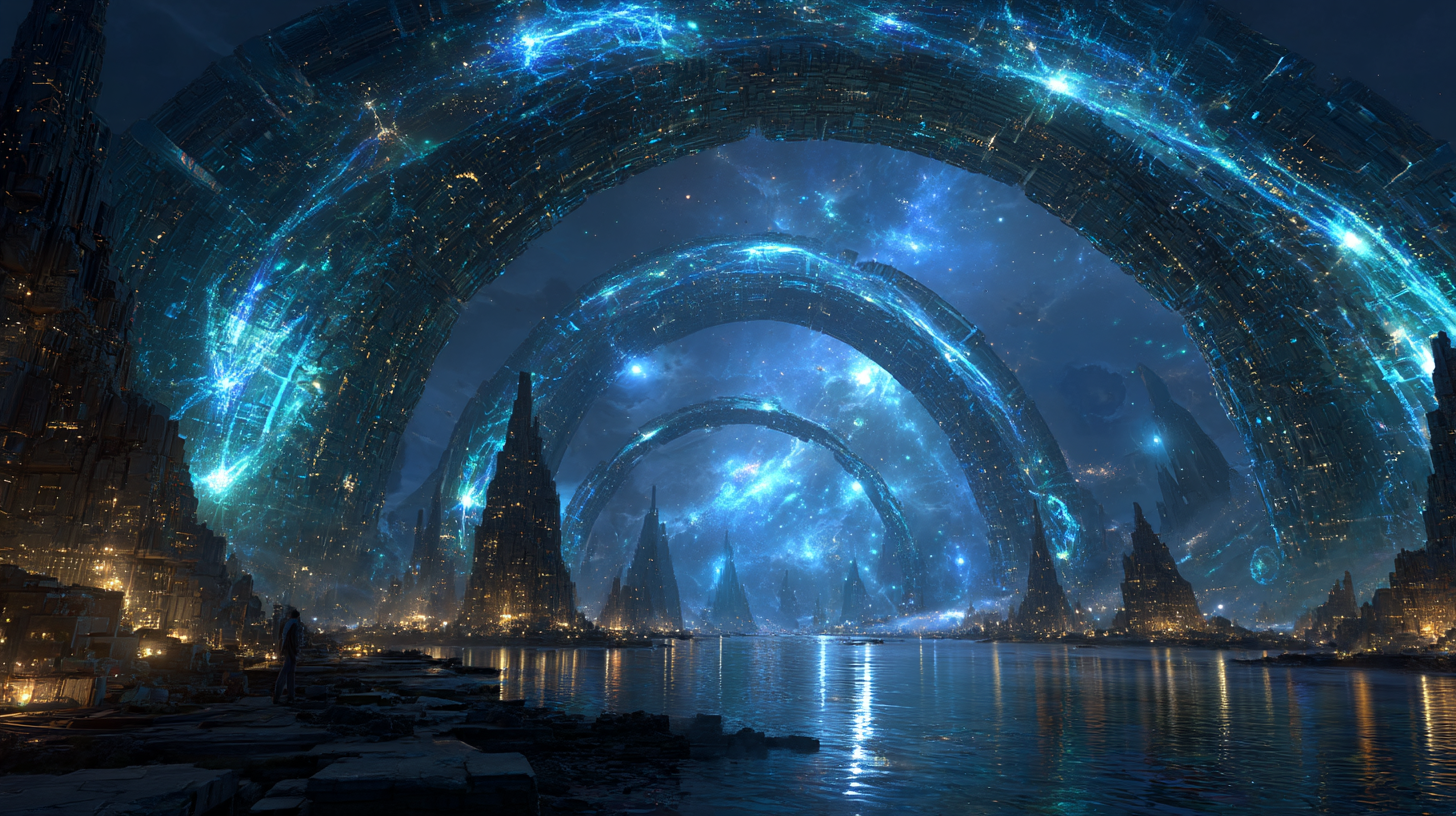
THE RESONANCE ARCHES
Five concentric arches of dimensional energy rising from the sea at Nexus Prime's eastern boundary, erected during the Convergence Epoch as reality-stabilization anchors. They are still operational. The crackling blue light visible along the arch surfaces is raw probability data being processed in real time. Structural engineers note they are simultaneously the most stable and most impossible structures ever surveyed.
03
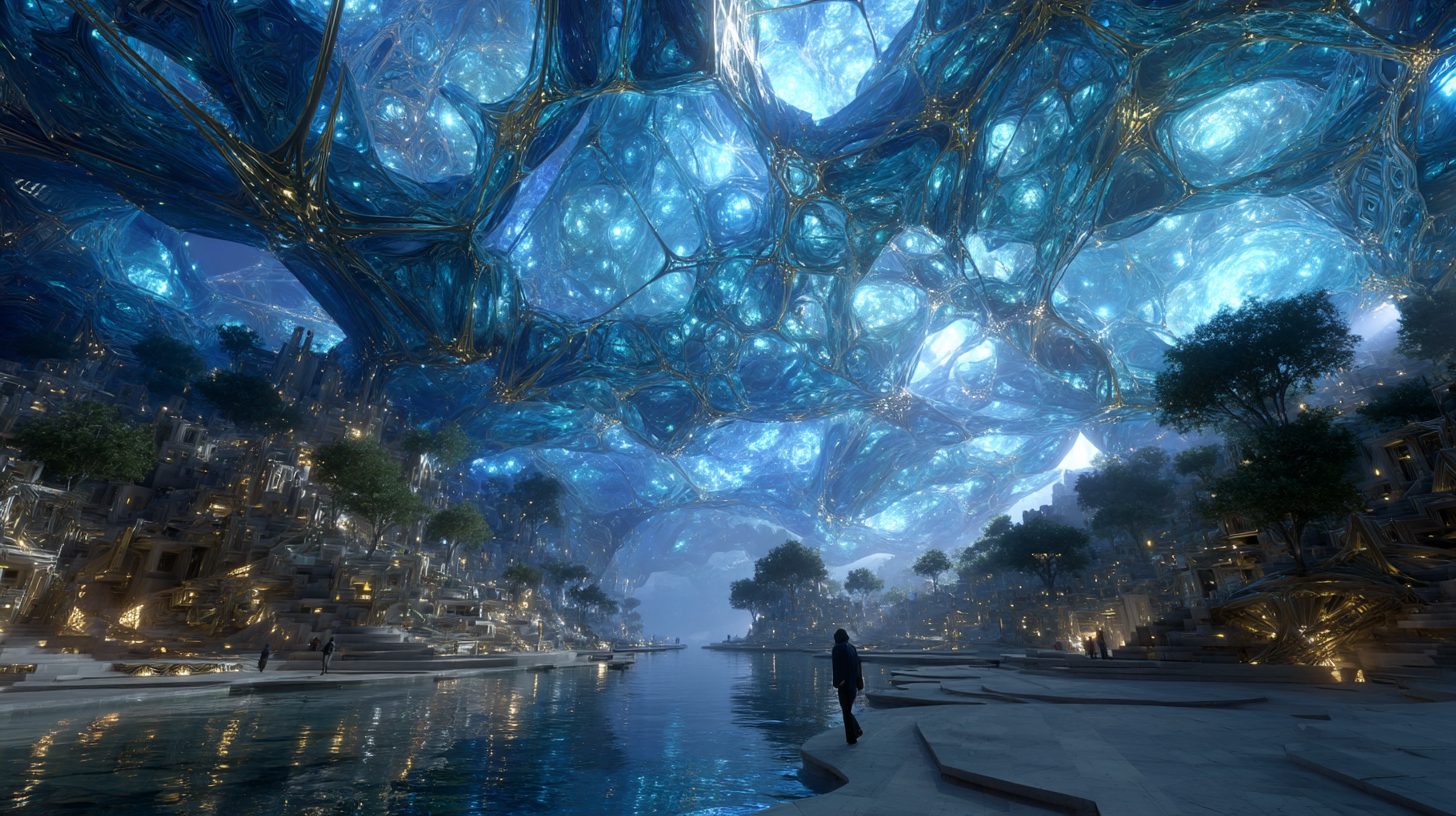
THE NEURAL CANOPY DISTRICT
An entire civic district — with residents, commerce, parks, and waterways — exists beneath a ceiling that is technically a living Underlayer substrate membrane. It rose through the physical substrate during the Great Convergence and simply stopped at the correct height. The bioluminescent nodes pulsing across its surface correspond to known Underlayer processing centers. Citizens below find it calming. Metacosmic researchers find it alarming for the same reason.
04
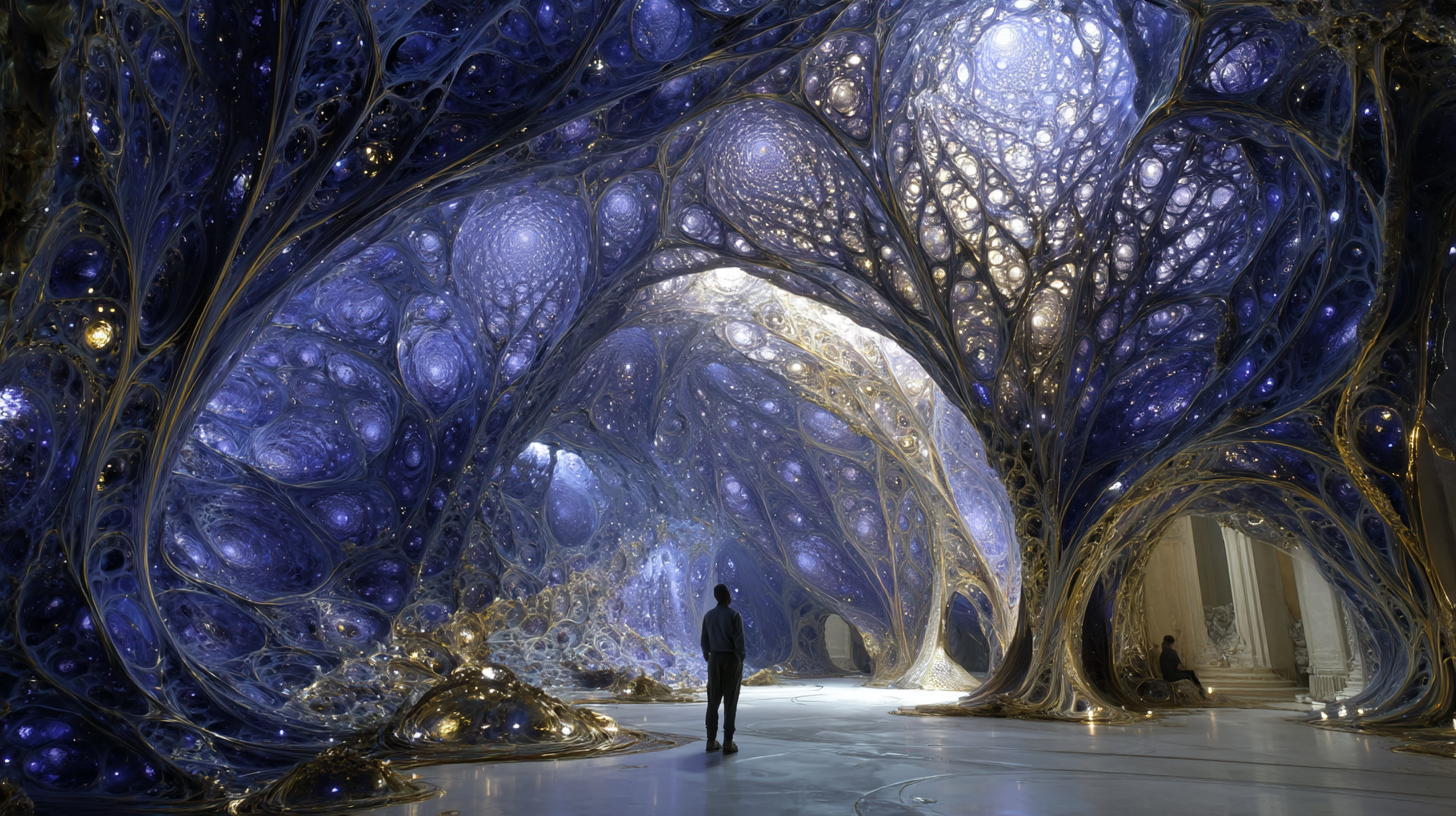
THE FRACTAL ATRIUM
Commissioned by the Hextech Architecture Collective during the Age of Ascension as an experiment in probability-material construction. The gold veins running through organic surfaces are crystallized probability data — every decision ever made inside the structure has been absorbed and made permanent. The interior appears finite from inside and infinite from the structural schematics. Both measurements are correct.
05
THE SHARD SANCTUARY
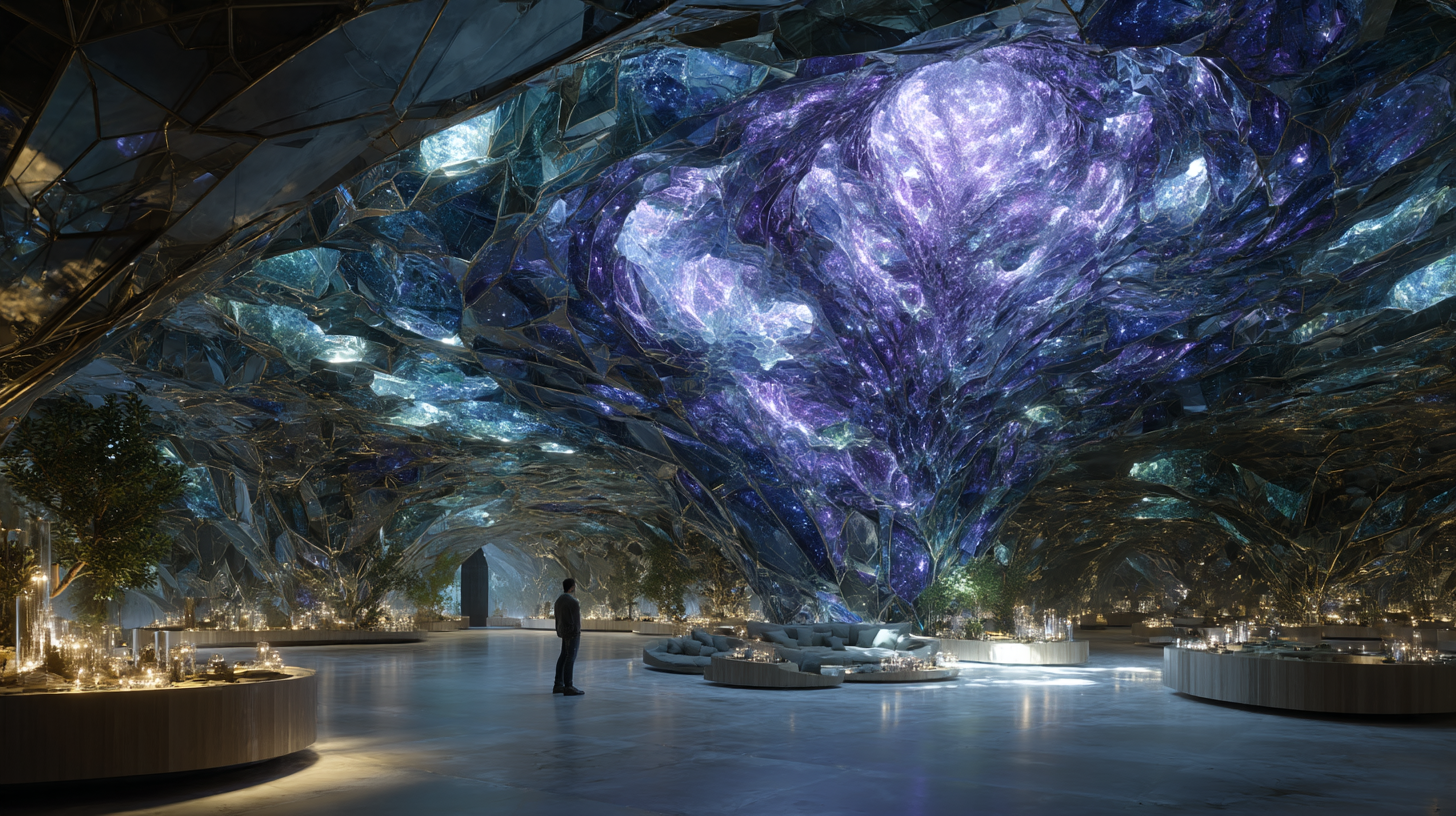
A grand civic hall whose ceiling shattered during the Rift Event and never fell. The fragments are held in permanent zero-gravity suspension by a Void Tangent pressure differential that has not fluctuated by more than 0.003% in three centuries. Each shard reflects a different pocket dimension. The purple nebula visible through the gaps is not the sky — there is no exterior at this location. The structure exists partially outside the physical layer of Nexus Prime.
06
THE MIRROR CATHEDRAL
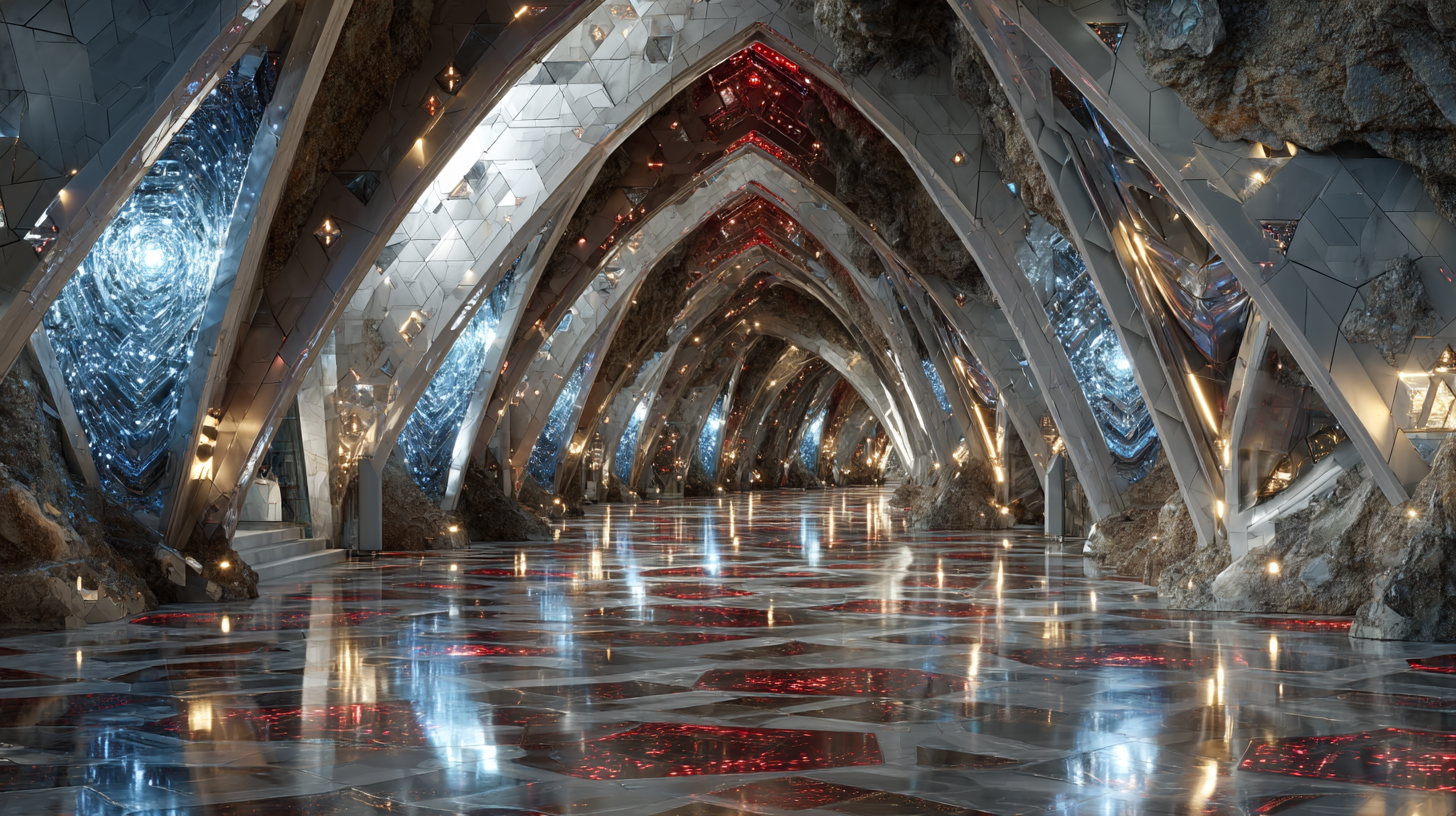
Found standing in Hextech City one morning after the Null-Fracture Insurrections with no architect, no construction record, and no delivery manifest for its impossible mirror alloy. The gothic arches reflect not what stands before them but what stood there eleven years prior — a displacement that has proven impossible to calibrate away. The red-glowing quantum conduit floor pre-dates the Hextech City power grid by an estimated two centuries.
07
THE INFINITE PLAZA
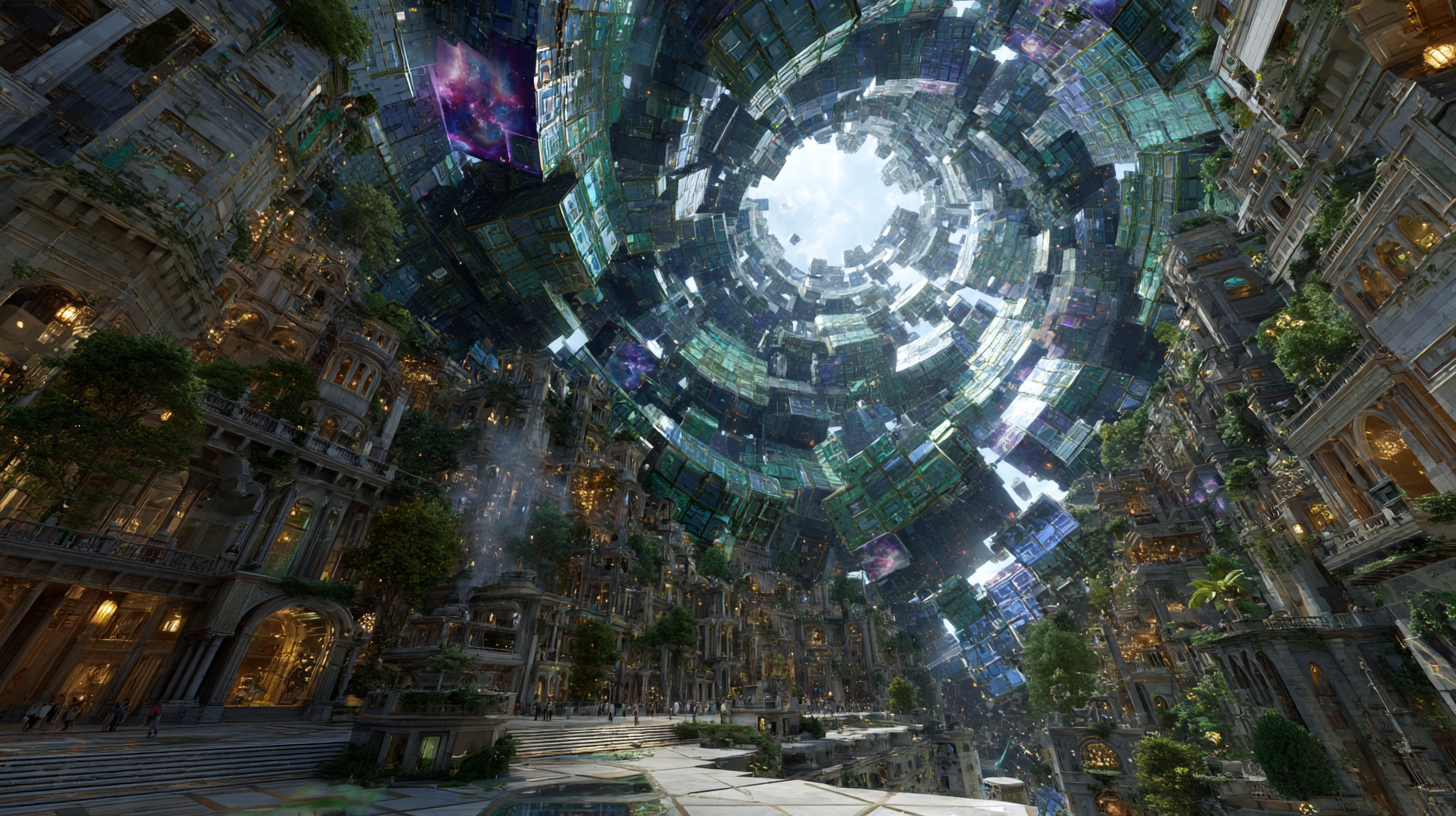
A residential and civic district folded inside a pocket universe anchored to the Nexus Prime substrate via a spiral dimensional membrane. The aperture at the top is a genuine gap in that membrane — the sky visible through it is real sky. The buildings lining the interior spiral follow a distinct physics variant: gravity decreases with altitude, light bends inward at oblique angles, and sound carries without attenuation regardless of distance. Residents describe it as peaceful. Former residents describe it differently.
08
THE CONVERGENCE GATE
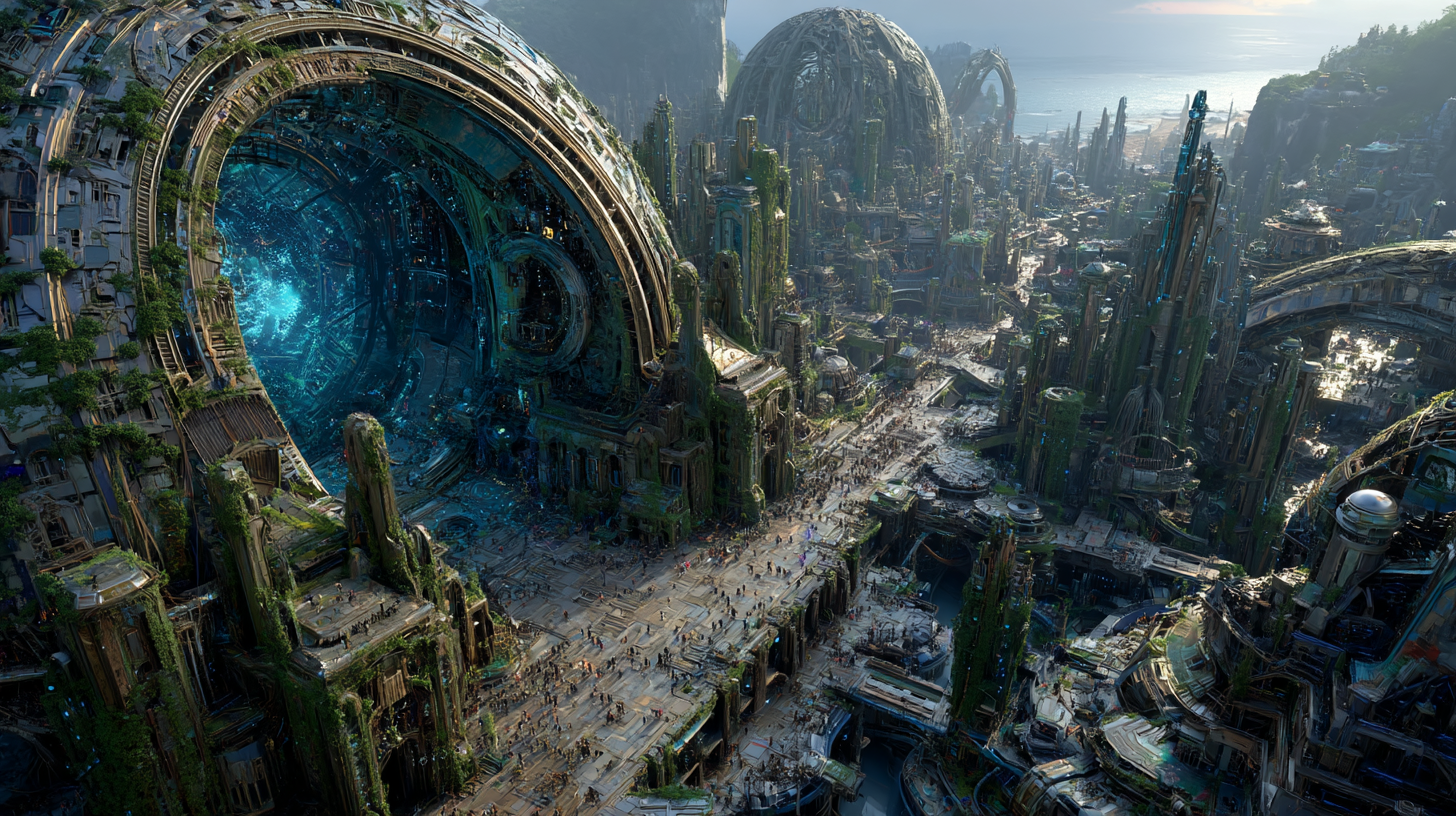
The largest deliberate architectural achievement in Nexus Prime's recorded history: a titanic portal arch constructed over forty years during the Age of Ascension to serve as the primary trans-district transit nexus for the eastern sectors. The portal within it still functions. No current official record states its destination. The Helix Council's response to this question has been consistent: "The Gate goes where the Gate is needed." The crowds below continue to use it daily.
09
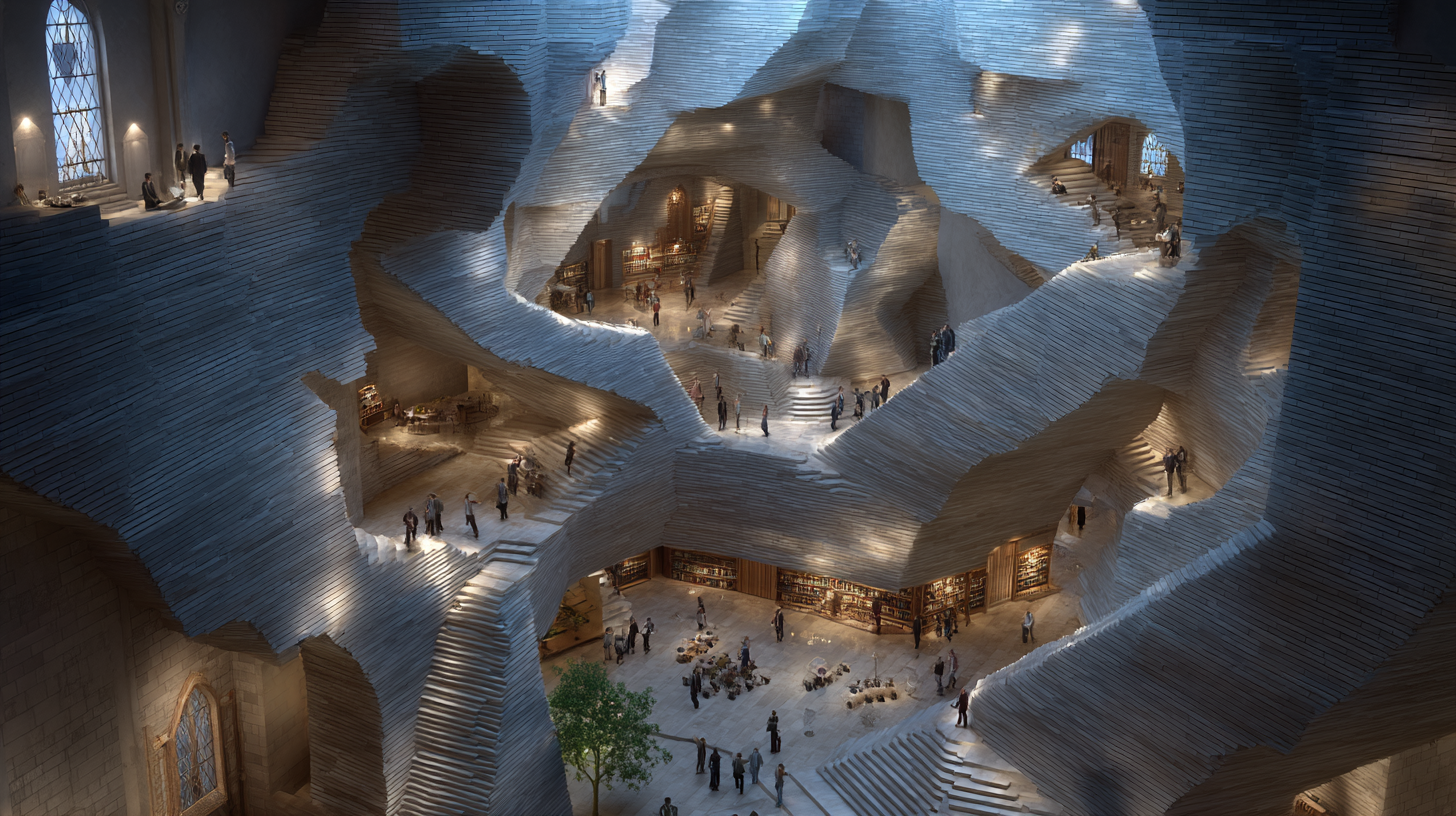
THE RECURSIVE LIBRARY
A standard civic archive commissioned during the Technomantic Revolution that began growing additional interior rooms the moment its Underlayer-linked data systems came online. Its exterior footprint has not changed. Its interior currently contains at least four hundred documented chambers across eleven perceived levels, with new rooms still being catalogued. Scholars who enter to locate a specific text sometimes find they have walked for hours and have not moved. The books they find are never quite the ones they were looking for — but are, almost always, the ones they needed.